
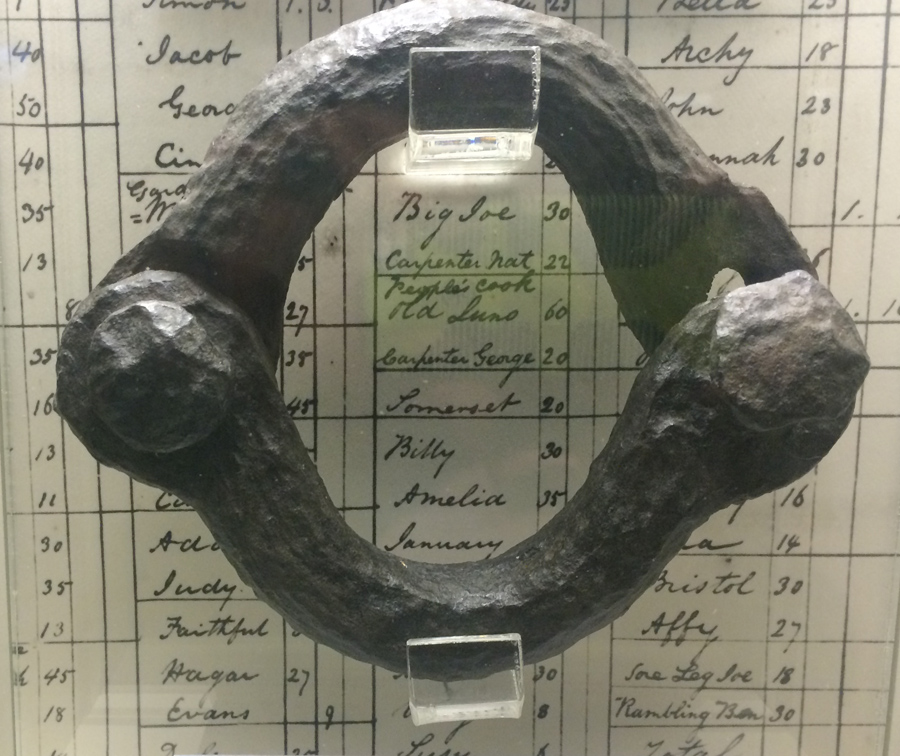
 photo of photo in the Charleston Museum
Blood and Indigo was the working title for my novel taking place in the mid-eighteenth century in South Carolina. (Settled later on The Weight of Cloth). I wasn’t planning to be so open about the project yet (though I am now more than two years into it), but there is an indigo workshop in September just outside of Charleston and I’m planning to go.
 I traveled to Charleston this past April, as some of you know, but was only there for a short while. I took tons of pictures and did two plantation tours and visited the Chalmers Street former slave auction site and spent two afternoons in the Charleston Museum, but this next trip would be fabulous — I’d get to see the area in the fall (and take tons more pictures) and the indigo! Well, check out Sea Island Indigo
 It all started with a book by India Flint called “Eco Colour”. In it, she devotes a page to the colonial settler, Eliza Lucas Pinckney, and her work with indigo. Next I read Eliza’s letters. Once I started asking myself, ‘what were the lives of her slaves like?’ I was off and running.
 from my indigo vat, 2012
For more than two years now, I have been writing and researching and have learned so much about American history that I feel like a different person than when I started out. Reading history about the enslaved is transformative. Details about the slave trade, the slave codes, the brutality, the labor practices, the attempts at rebellion, the words used by the elite to describe “their” African Americans — all change you.
The most recent thing I’ve read about racism was published in a recent issue of The Atlantic Monthly, and it’s called “The Case for Reparations”. Written by Ta-Nehisi Coates, it is hard-hitting, full of examples of ongoing harm, and it will make you shake your head in sadness and wonder at what we are — we Americans, this America.
An African American crafter will be teaching rag quilting and talking about Gullah culture. I cannot wait.
 paper piece revealing what must be the name of one of Eliza’s sons, Charles Cotesworth Pinckney

